Onki
Designing an AI sommelier for the wine aisle.
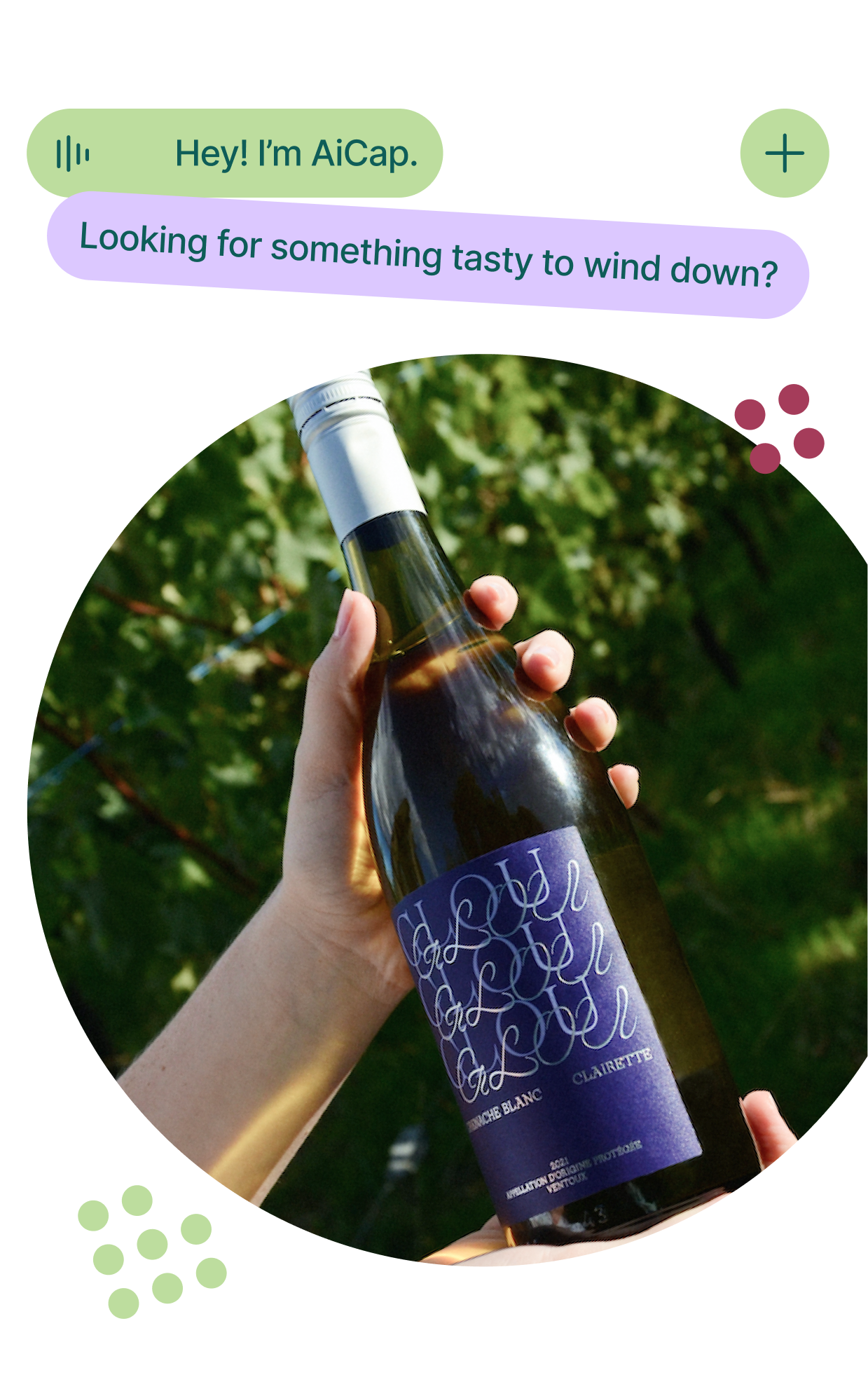
AICap is a voice + touch retail kiosk that helps shoppers discover wine through conversational AI, built by Onki, a NYC startup founded by ex-Amazon innovators.
- Company
- Onki AI, NYC
- Role
- UI/UX Design Intern
- Duration
- Apr – Jun 2024
- Tools
- Figma, FigJam
- Live
- onki.ai
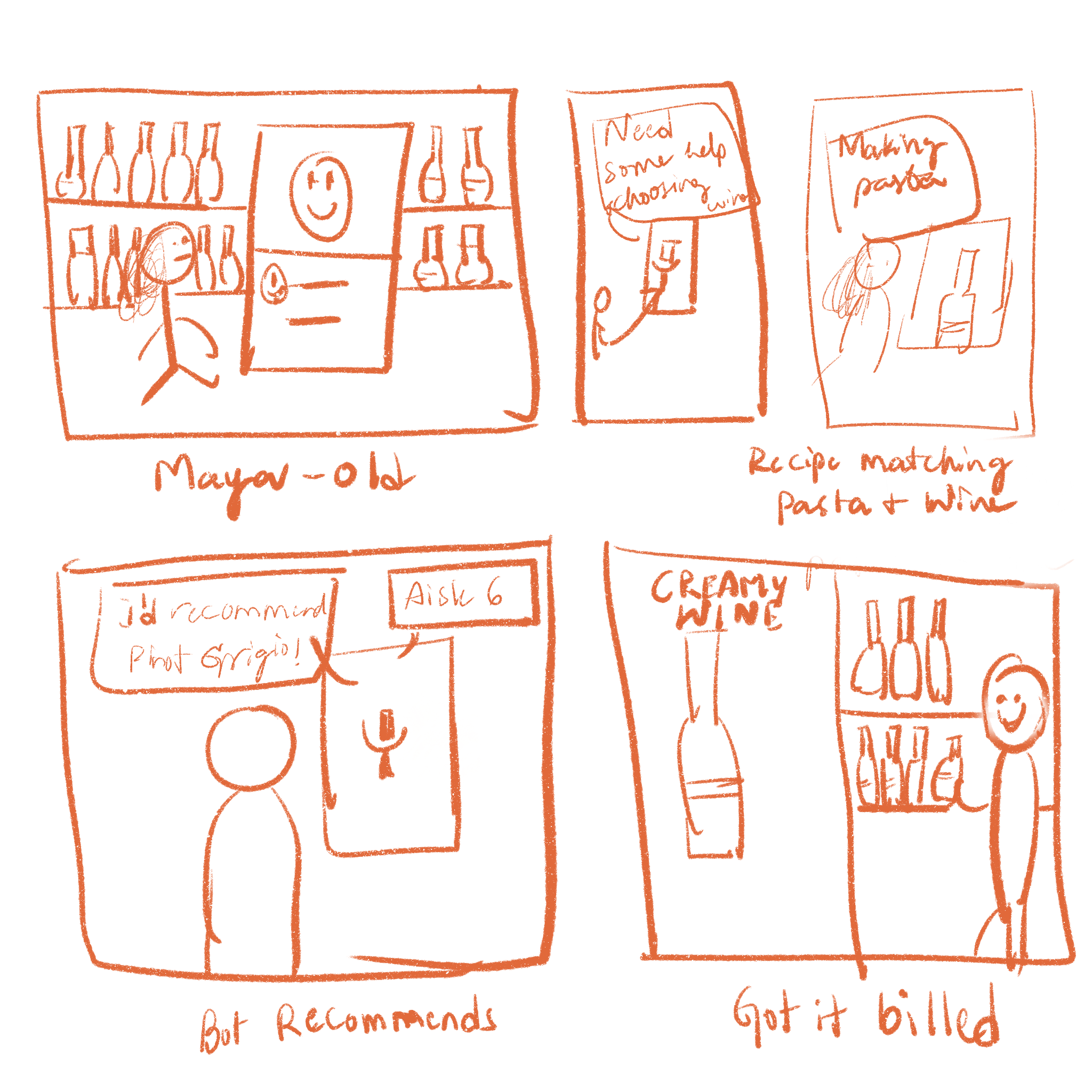
Wine aisles have hundreds of choices and zero guidance.
Younger shoppers (low-to-medium wine knowledge) consistently freeze at the shelf. Too many options, no personalization, no one to ask.
this was me at every grocery store, honestly.
Key Insights
Shoppers want confidence, not expertise.
Nobody wants to become a wine expert in the aisle. They just want to feel good about their choice.
Too many options is the real problem.
Choice overload, not lack of information, is what kills purchase confidence at the shelf.
Trust is the first conversion.
If a shopper doesn't feel comfortable with the AI, they walk away before the recommendation even happens.
Today’s retail shelves are passive. AICap makes them talk back.
Static labels and understaffed stores can’t deliver personalized guidance at scale. We designed the experience that bridges that gap, from first greeting to the right bottle.
before
after
Design Decisions
The reasoning behind the work.
Every interaction had a UX principle behind it.
every choice had a “why”. these are mine →
Voice + touch: both, not either
Some shoppers carry baskets. Some feel self-conscious talking to a screen in public. We designed every interaction to work through both modalities, rooted in inclusive design and redundant interaction pathways.
Always 3 recommendations, not more
Hick's Law: more options = longer decisions. In an aisle of hundreds, 3 curated choices reduce cognitive load and feel like a sommelier's pick, not another shelf.
Questions ordered by difficulty
Type → price → flavor → pairing. Everyone knows red vs white. Far fewer know their tannin preference. Starting simple builds momentum and mirrors how a good sommelier talks to a customer.
Conversational tone, not transactional
AICap proactively greets strangers in public. A robotic tone creates resistance. Warm language lowers the psychological barrier before the recommendation happens.
Save / Text me / Item location
A recommendation alone doesn't close the loop. These three features address distinct post-decision drop-off moments: finding the bottle, not ready to buy, or revisiting the choice later.
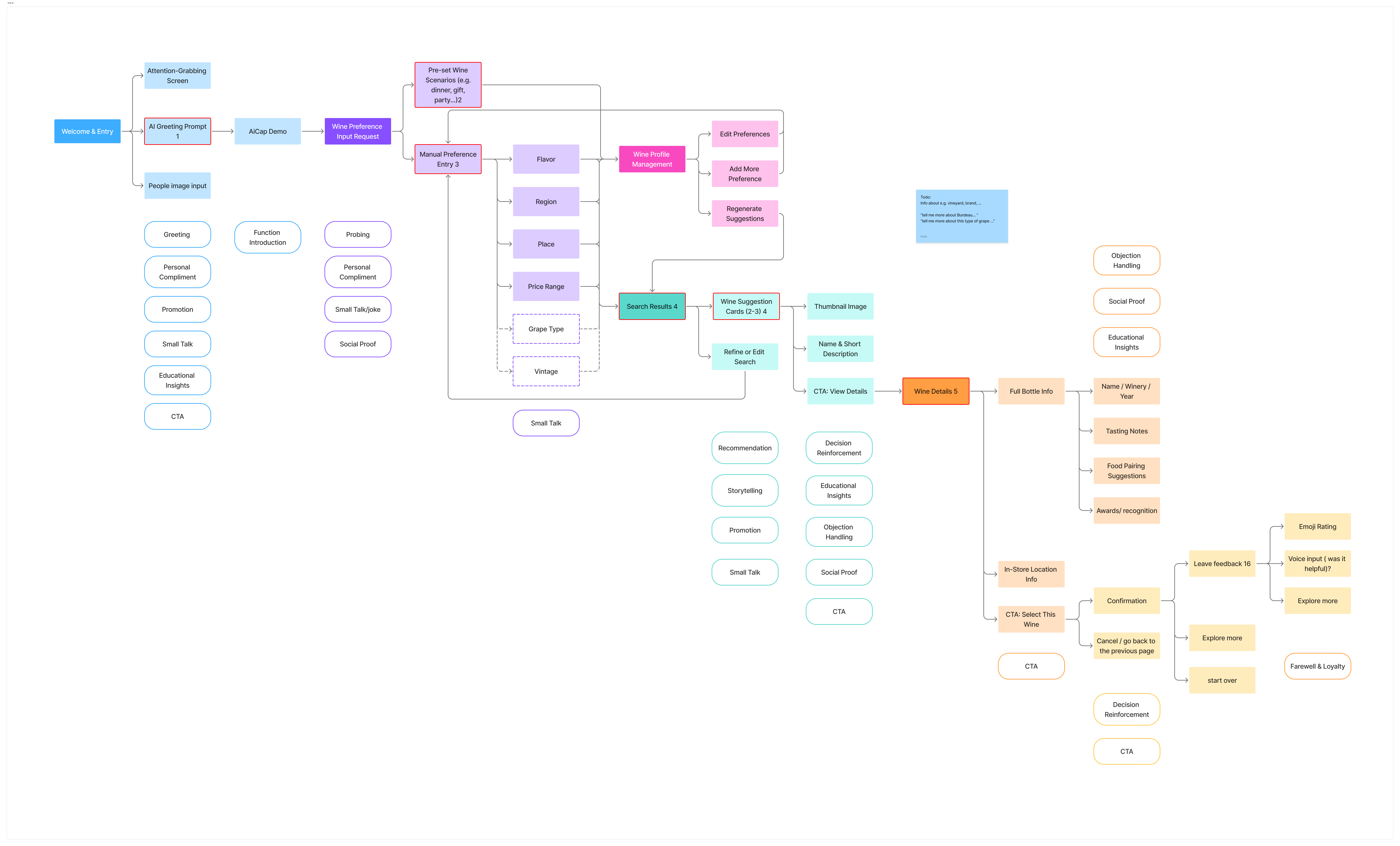
information architecture
Designs shipped. Numbers followed.
The designs contributed to AICap’s real in-store deployment. Early retail data showed strong commercial impact.
0%
of wine shoppers interacted with AICap
0%
more spent by shoppers who engaged
0
interns drove all design decisions independently
Post-deployment metrics from Onki’s published retail data. Deployment occurred after the internship concluded.
still can't believe this actually shipped.
the screens, end to end
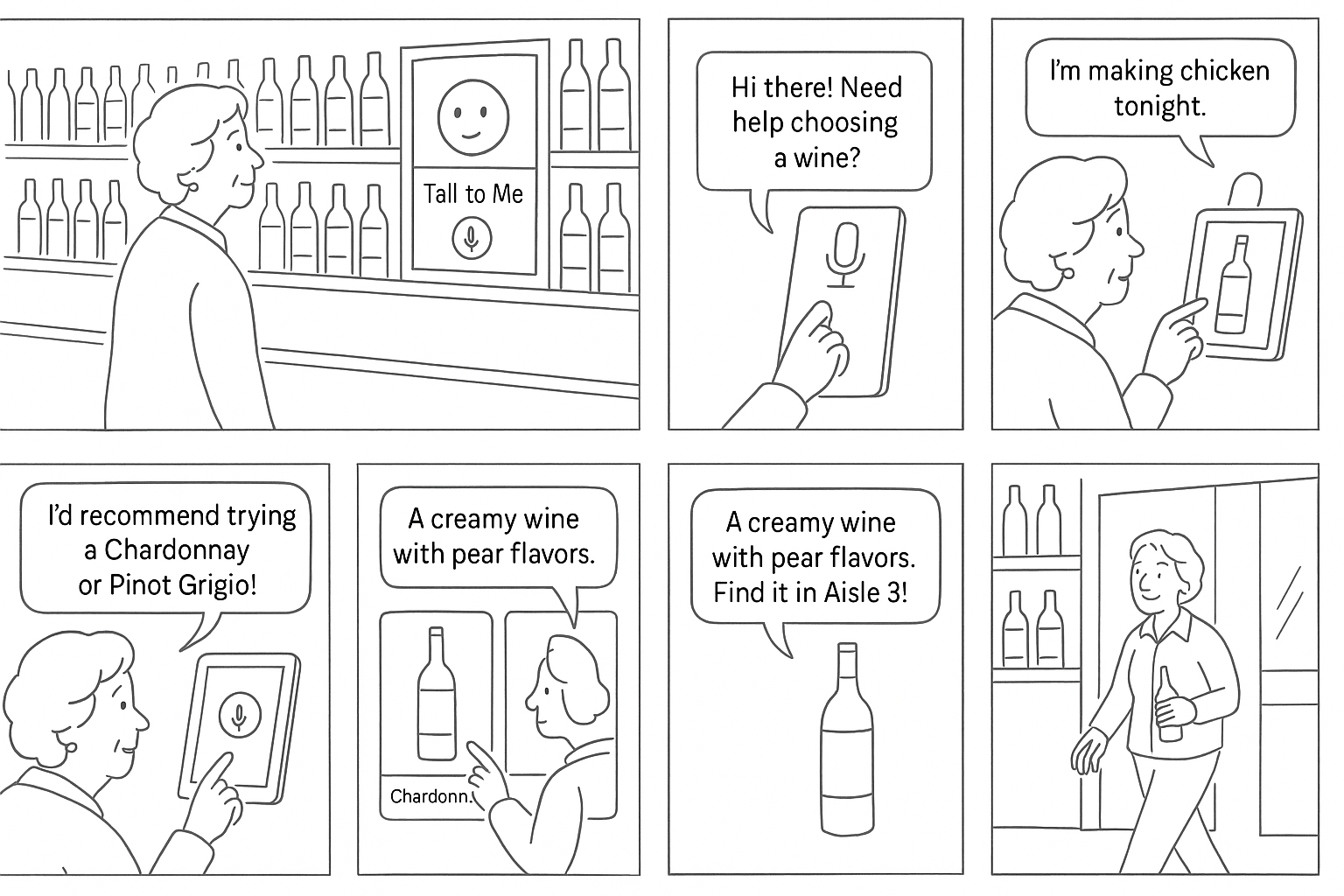
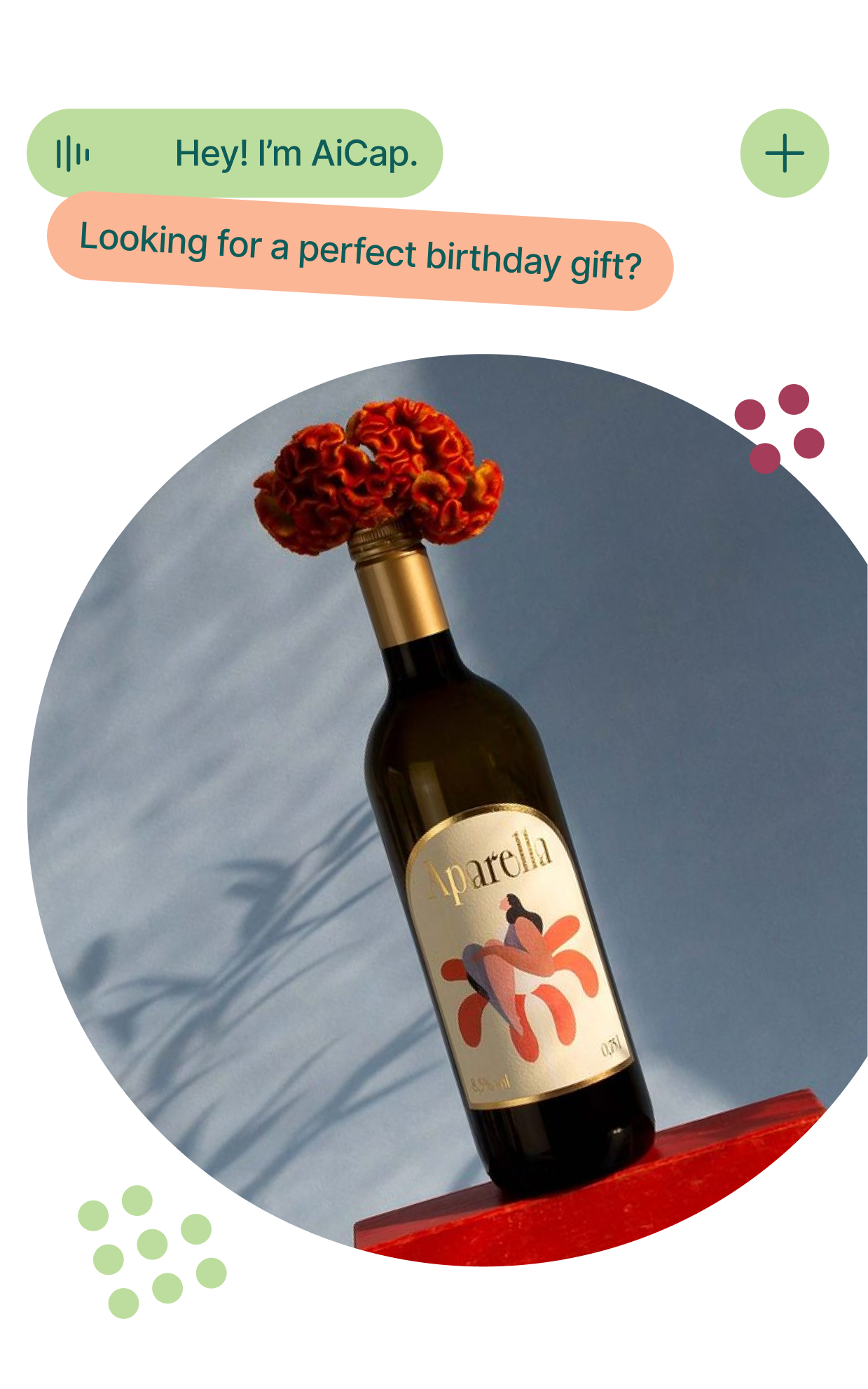
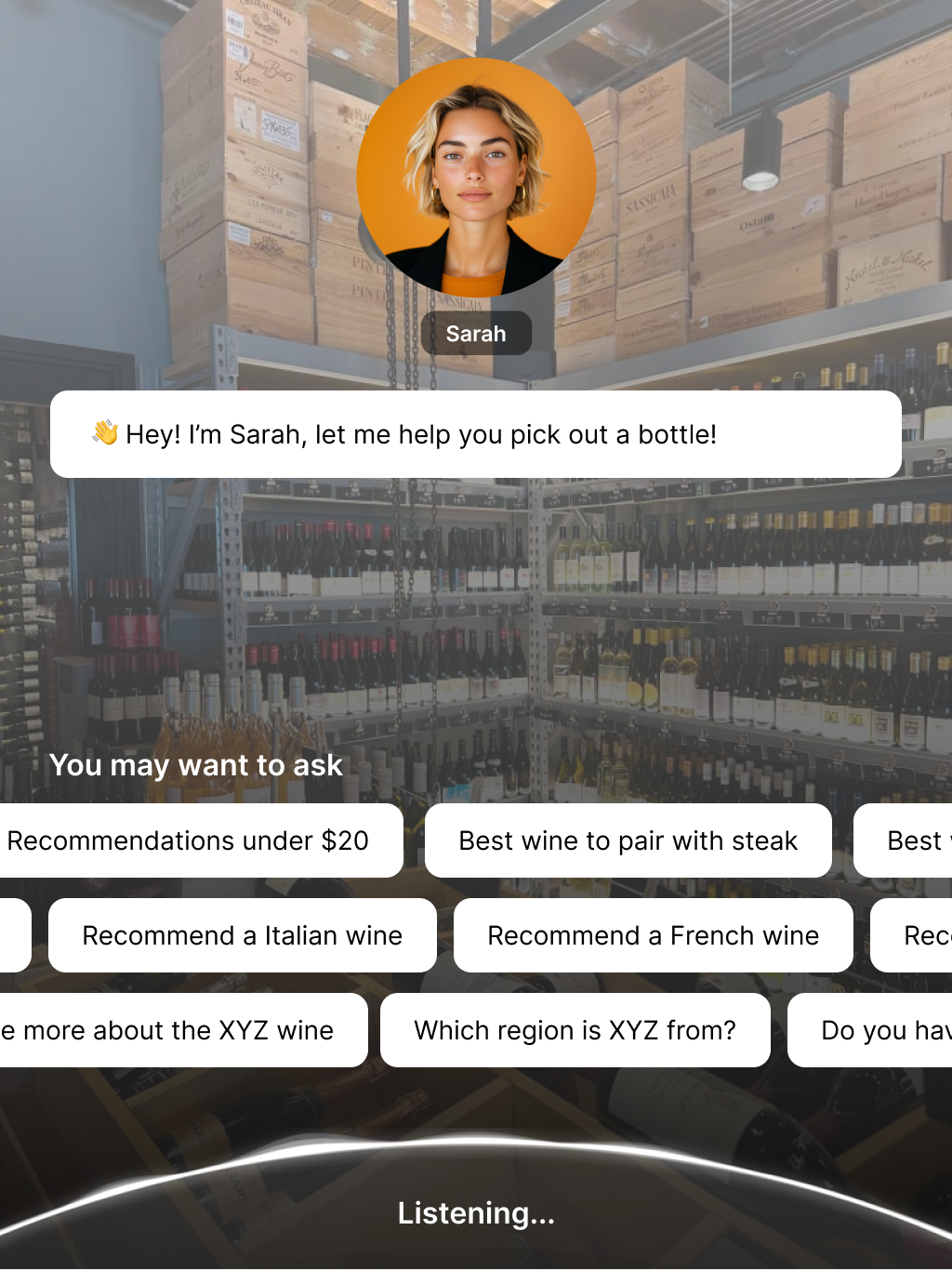
Welcome / greeting
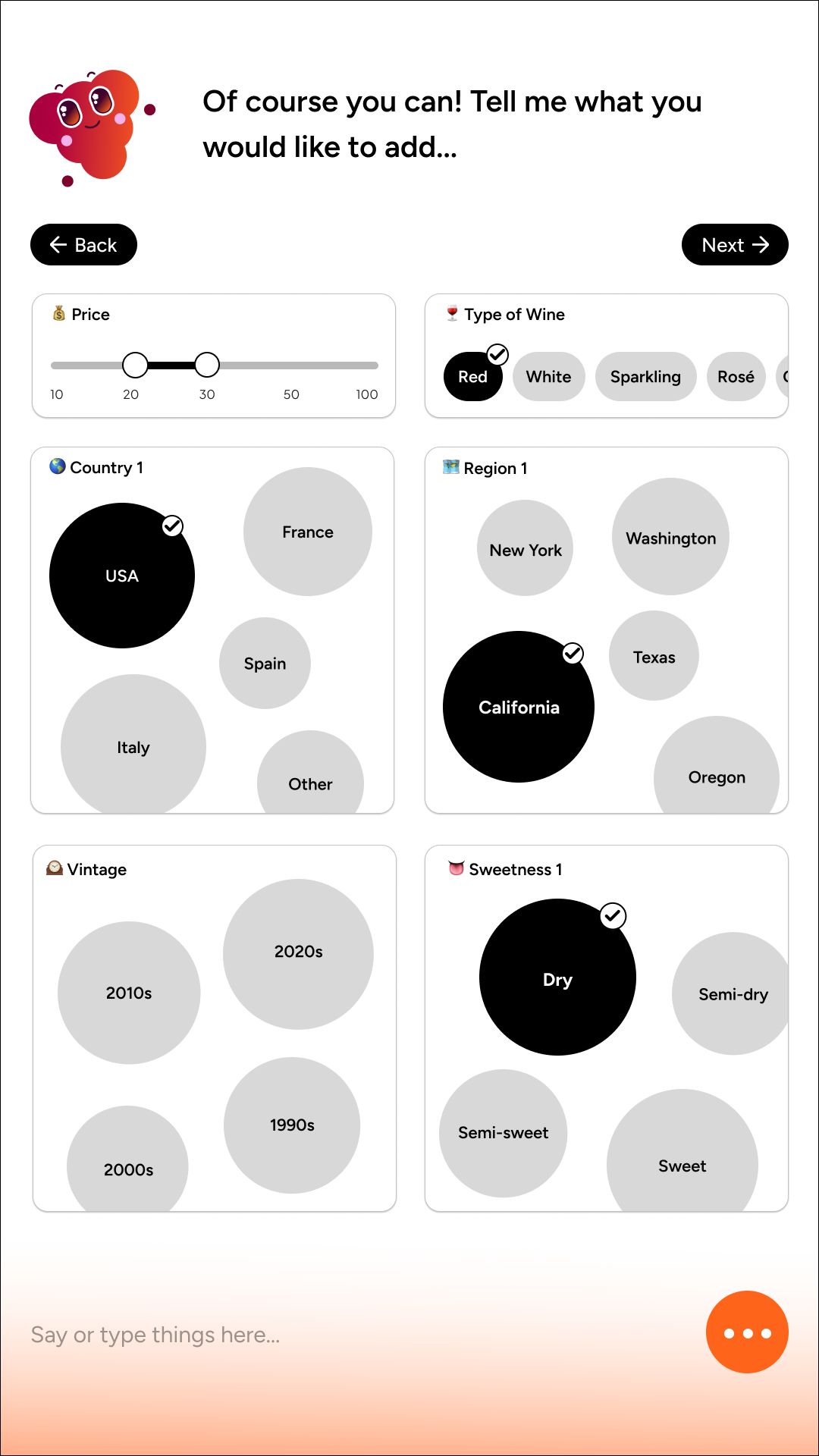
Preference input
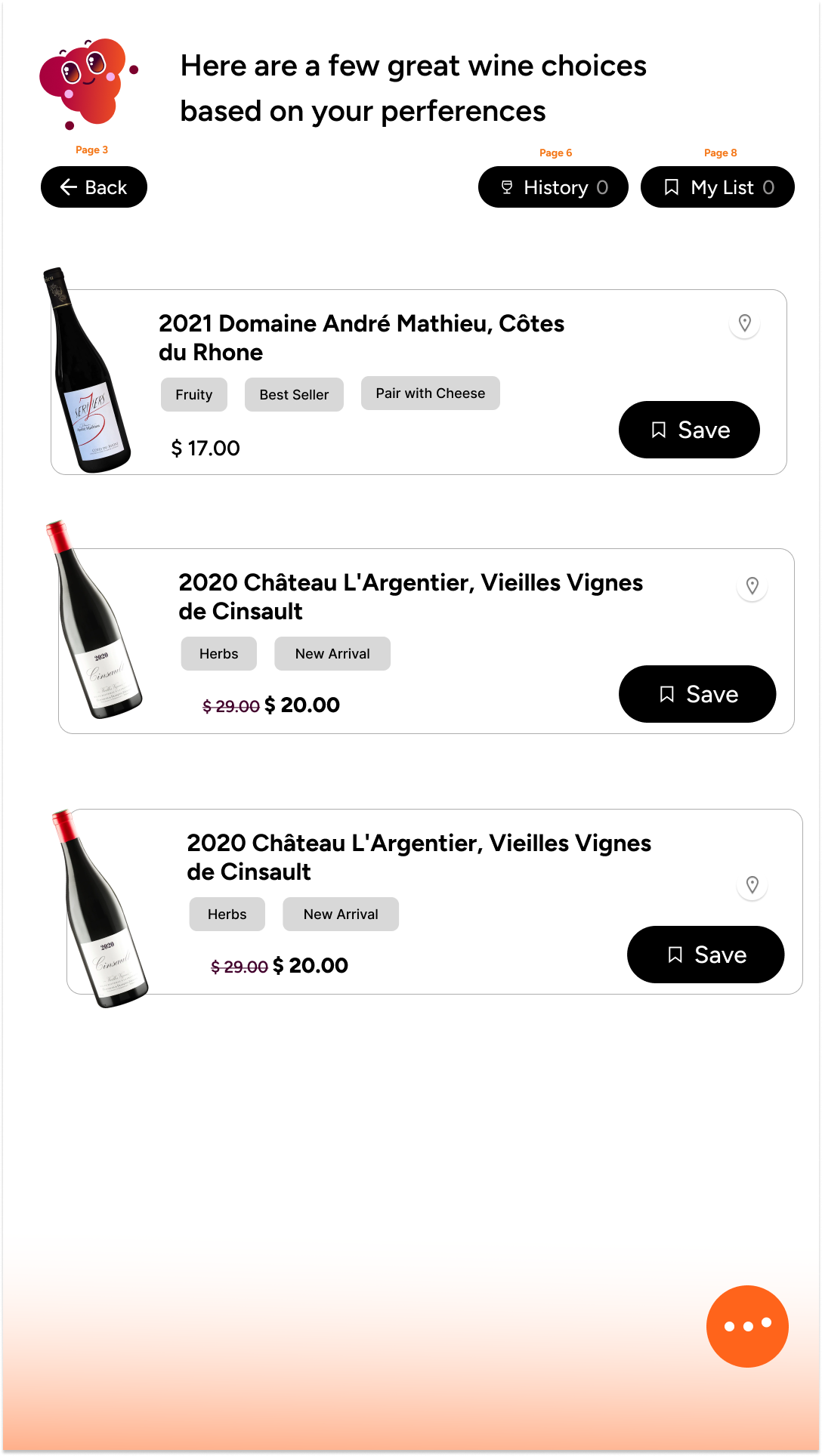
Recommendation cards
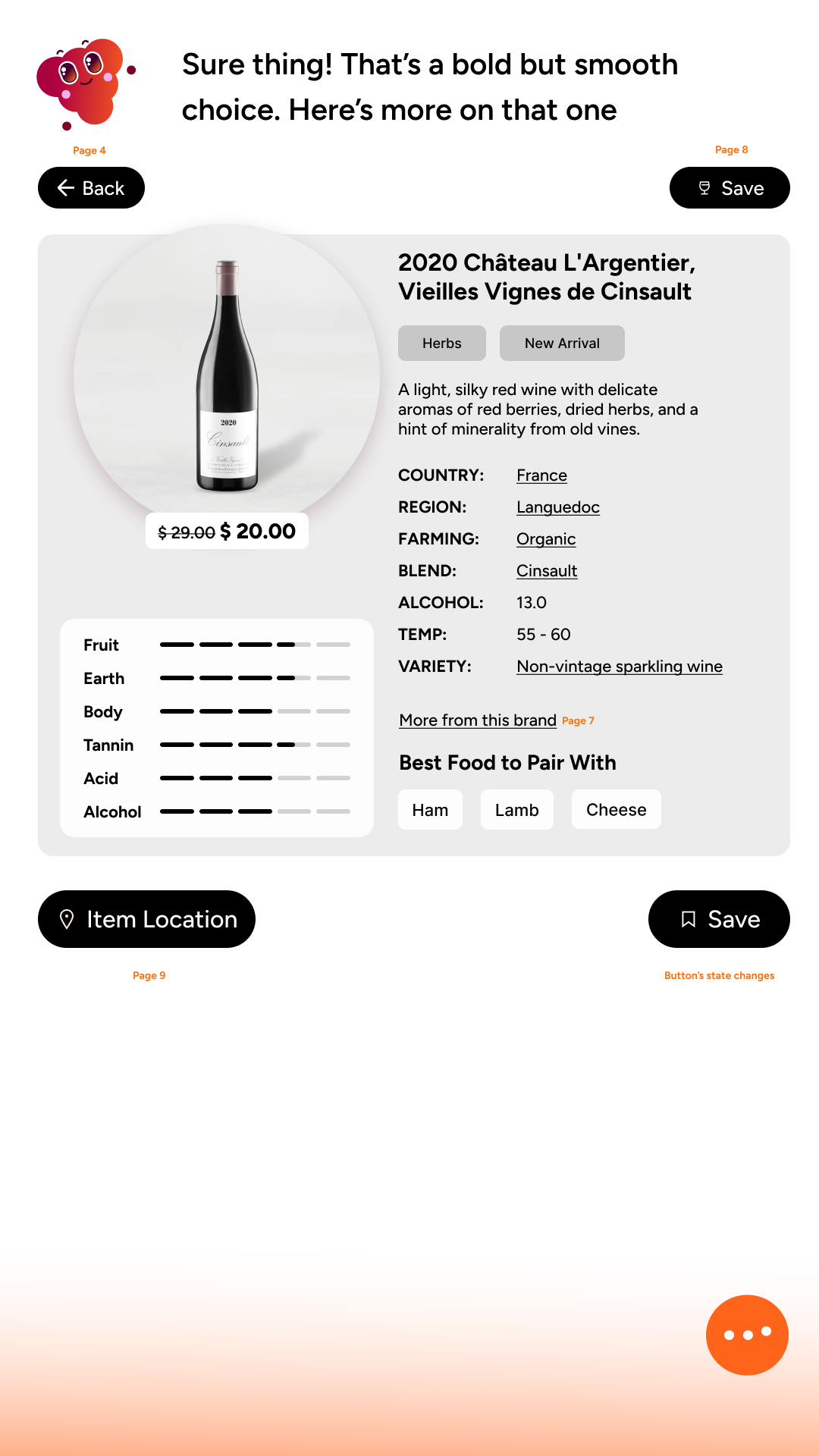
Wine detail
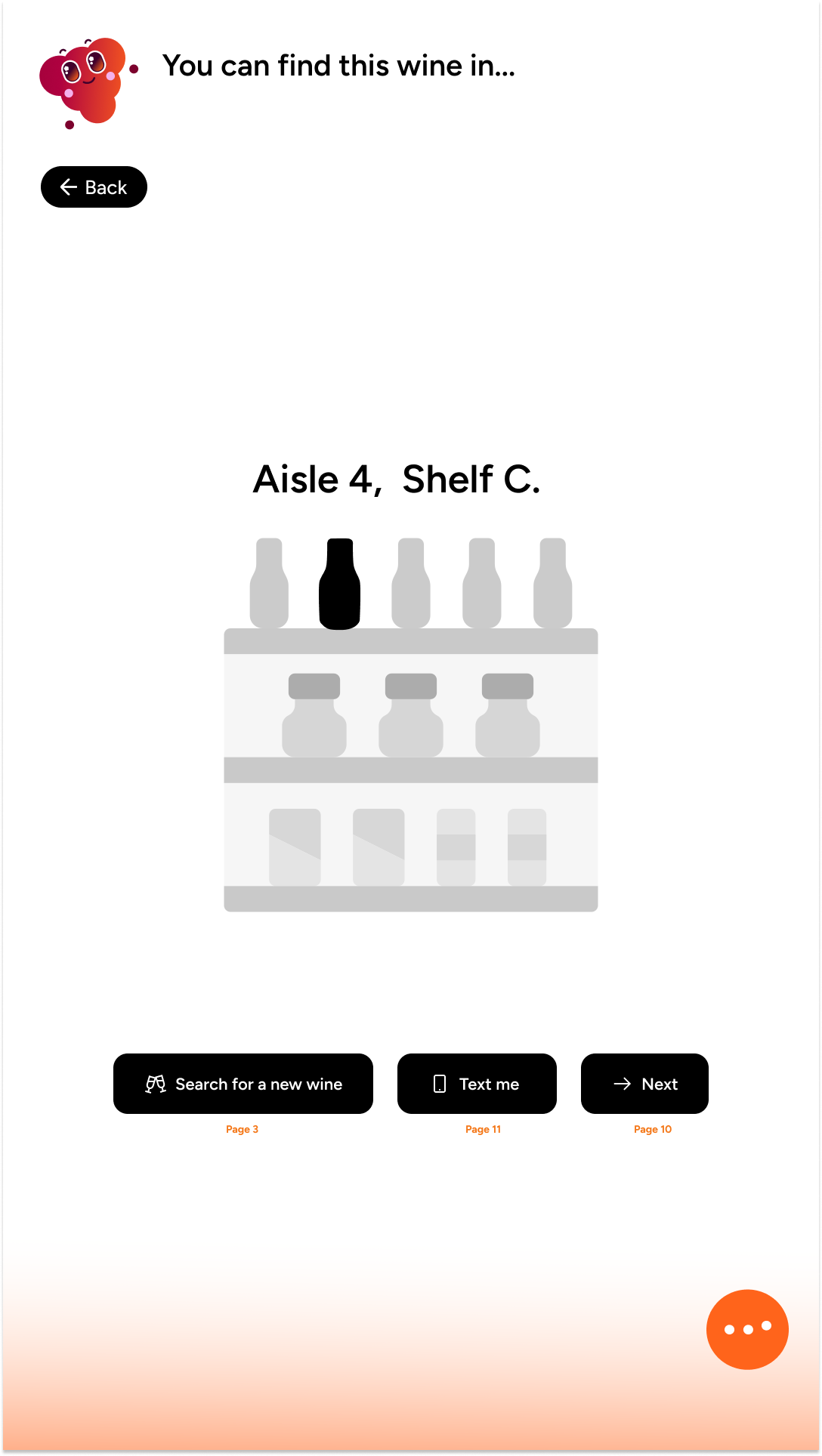
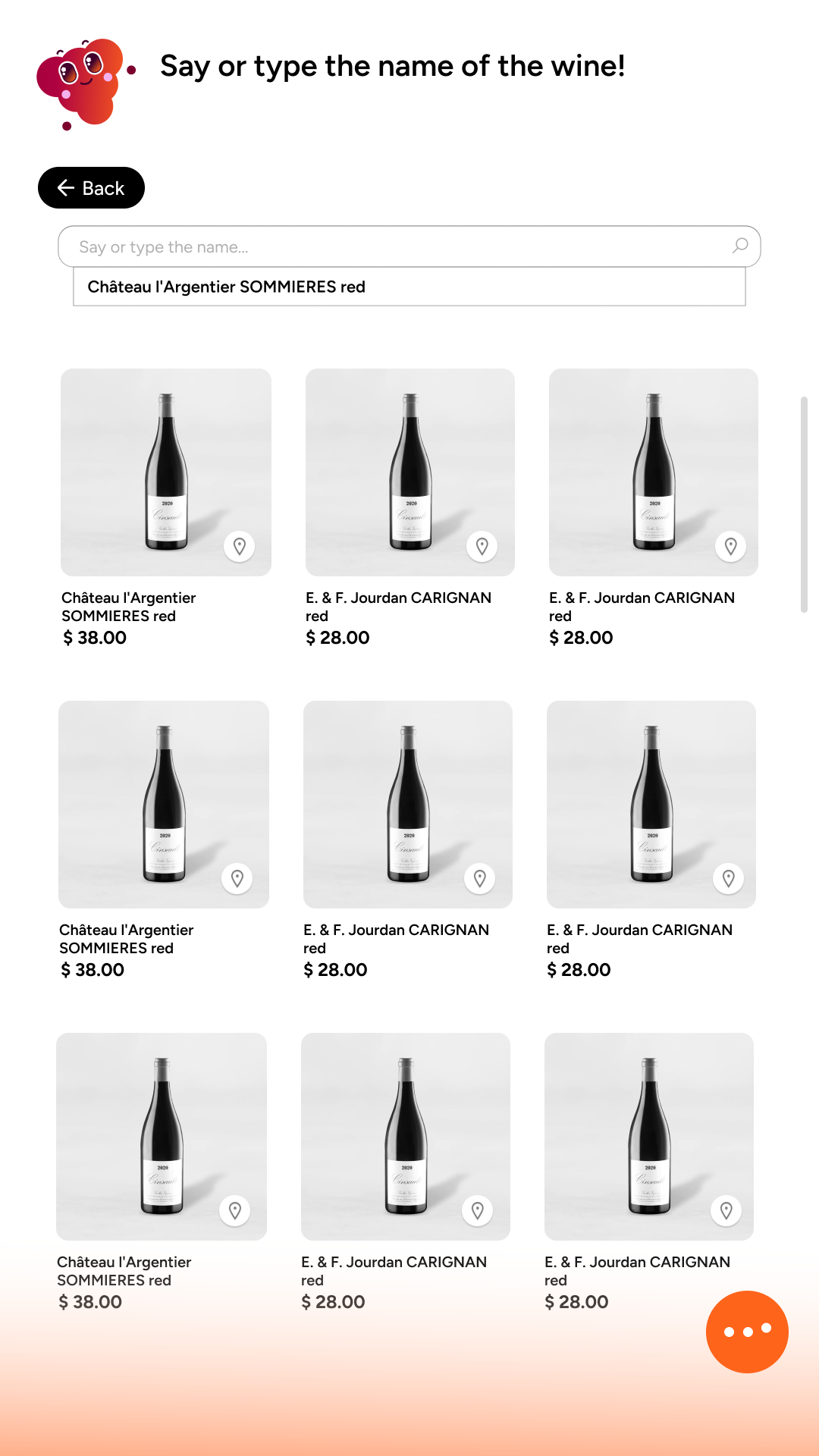
Find this wine